Tree Health & Diagnostics Boise: Find Out What Is Wrong While It Can Still Be Fixed
Thinning canopy, yellow leaves in July, mushrooms at the base. Trees rarely die overnight, they decline for years while nobody asks why. We ask why, and give you a straight answer about what to do.
No obligation.
The trees worth worrying about
A big, mature tree near the house is an asset while it is healthy and a liability the day it is not. Knowing which one you have is the whole point of an assessment.
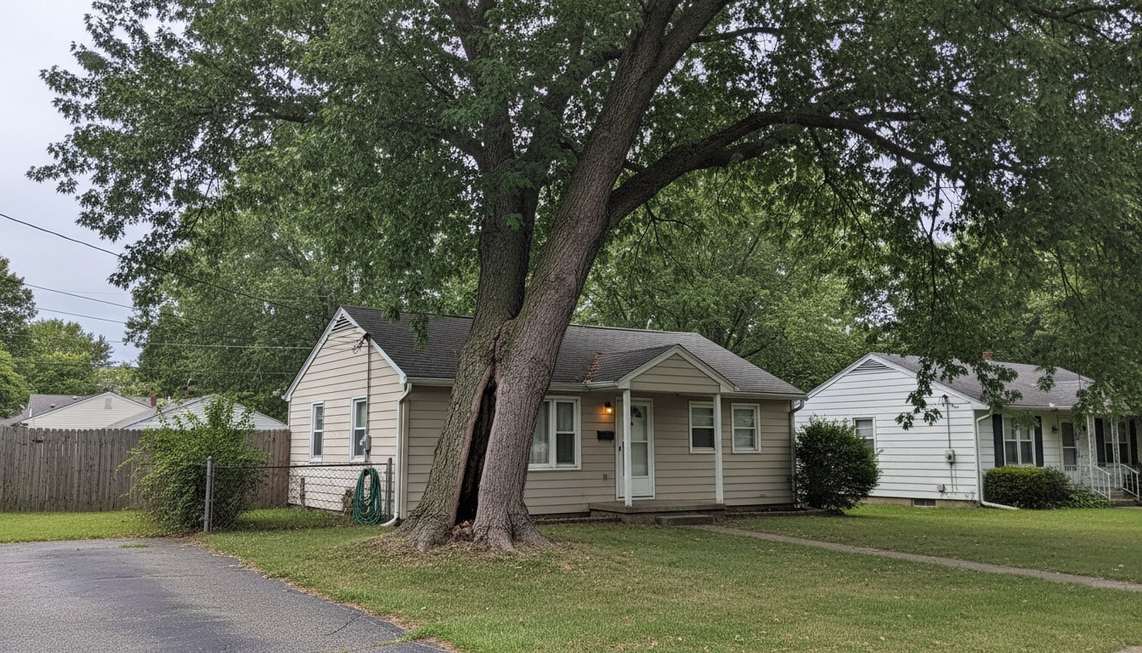
Tree Health Assessments and Diagnostics in Boise, ID
Most tree problems in the Treasure Valley are not mysteries. They are the same handful of stresses, alkaline soil, high-desert summers, lawn-schedule watering, and a few well-known pests, showing up in slightly different costumes. The trick is telling which one you are looking at, because the treatments are completely different and treating the wrong thing wastes a season the tree may not have.
That is arborist work, not guesswork. Our assessments are backed by ISA Certified Arborists with Tree Risk Assessment Qualification, and the deliverable is plain: what is wrong, how bad it is, and what is actually worth doing about it, treat, prune, monitor, or remove. Honest assessments are the whole product. We would rather tell you a tree needs nothing than sell you a treatment it does not.
What Are the Signs Your Tree Is in Trouble?
- Thinning canopy, you can see more sky through it each summer
- Yellow leaves with green veins, the classic Treasure Valley iron chlorosis pattern
- Dead tips working inward from the ends of branches
- Mushrooms or shelf fungi at the base or on the trunk, often a sign of internal decay
- Bark problems, cracks, oozing, sloughing, or woodpeckers working one spot hard
- Early fall color on one limb or one side while the rest is green
- Sucker growth erupting from the base or trunk, a stress response
What Usually Goes Wrong With Boise Trees?
Iron chlorosis. Boise's alkaline soil locks up iron, and silver maples, pin oaks, and river birches planted all over the valley cannot pull enough of it. Leaves go yellow while the veins stay green, and untreated, whole limbs start dying back. It is one of the most treatable problems on this list, and one of the most common.
Drought and irrigation stress. A tree in a lawn gets watered like a lawn: shallow and often, when it wants deep and rarely. Years of that builds a shallow, fragile root system and a chronically stressed tree, which is the welcome mat for everything else on this list.
Pests. Aphids raining honeydew from maples and lindens, spider mites in the August heat, scale on ash and elm, and bark beetles moving into already-stressed conifers. Most pest problems are manageable if they are identified before the second or third season of damage.
Dutch elm disease. Boise's older neighborhoods still carry mature American elms, and the disease still moves through bark beetles and root grafts. Wilting, yellowing foliage progressing through the canopy is the flag, and elms should never be pruned April through October here, fresh cuts attract the beetles that carry it.
What an Assessment Looks Like
- The walk-around. Root flare, trunk, major unions, canopy, from the ground up, looking for decay, cracks, pest sign, and structural weakness.
- The diagnosis. What is stressing the tree, in plain language, not Latin.
- The honest fork. Treat it, prune it, watch it, or remove it. We tell you which category your tree is in and what each path costs.
- The work, if you want it. Targeted pruning to remove infected or dead wood, treatment where it genuinely works, or removal when that is the responsible call.
How Risky Is the Tree, Really?
Half of tree-health calls are really risk calls: "Is this tree going to end up on my house?" That is a fair question, and answering it properly is a qualification of its own, Tree Risk Assessment Qualified means trained to evaluate the likelihood of failure, not just eyeball it. Decay you cannot see from the ground, weak co-dominant unions, and root damage are exactly the problems that make a green, healthy-looking tree dangerous. If your big tree stands over the roof, the driveway, or the trampoline, an assessment buys you either peace of mind or a head start.
What Does a Tree Health Assessment Cost?
The estimate is free, and for most health calls the assessment happens as part of it: you point at the tree, we look at it properly, and you get the diagnosis and options with a written number for any work worth doing. No pressure, and no invented urgency, if the honest answer is "watch it for a year," that is the answer you get.
Something looks off about your tree?
Boise Neighborhoods We Serve
Health and diagnostic calls run everywhere our crews do: the North End's old canopy, the Bench, Warm Springs, Downtown, Harris Ranch, and West Boise, plus Meridian, Nampa, Garden City, Eagle, and Caldwell.
When the Answer Is Not Good News
Sometimes the diagnosis is the one nobody wants: the tree is past saving, or the risk is too high to leave standing. When that is the verdict, we say it plainly, explain why, and handle the rest properly.
Tree Trimming
Targeted pruning removes dead, diseased, and structurally weak wood, often the treatment a stressed tree actually needs.
Learn About Tree TrimmingTree Removal
When a tree is past help or too risky to stand, it comes down safely, in sections, with full cleanup.
Learn About Tree RemovalGet your free, no-obligation estimate
Call and describe what the tree is doing, and you get your Free estimate. No form, no waiting.
Call (208) 902-2295Free estimate over the phone, straight answers See your price30-second calculator on the home pageNo obligation, no pressure.