Tree Trimming Boise: Healthier Trees, Off Your Roof, By Certified Arborists
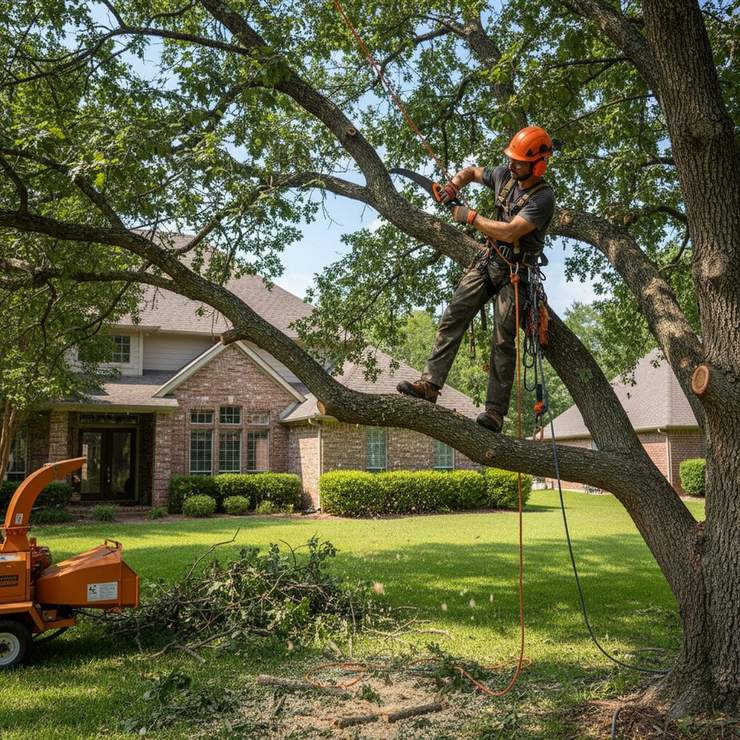
Proper cuts at the right time of year, limbs cleared back from shingles and lines, and a tree that comes through the next windstorm in one piece.
Why Boise Homeowners Choose Boise Tree Boys
Keeping Boise trees safe, healthy, and off your roof. Licensed, bonded, and insured crews, ISA Certified Arborists, written estimates, and cleanup that tidies your yard before we go.
- ✓ Keep limbs off your roof, gutters, and power lines
- ✓ Improve tree health and curb appeal for years, not months
- ✓ Free, no-pressure written estimate
We trim and prune trees across the Boise metro, Boise, Meridian, Nampa, Eagle, and Caldwell, with the same crew, the same standards, and the same cleanup on every job.
Boise-local crew
We live and work in the Treasure Valley, not a traveling outfit or a national franchise. We know Boise's trees, soils, winds, and the species that cause the most trouble here.
Proper pruning cuts
We prune to industry standards, the right cuts at the right points, so your trees heal cleanly and stay healthy instead of being damaged by bad work.
Free written estimates
You get a clear, itemized written estimate before any work begins, so you know the scope and cost up front.
Standards-based pruning
Every cut follows ANSI A300 pruning standards. We never top trees, and full cleanup, branches chipped, debris hauled, the area raked and blown, is included in every job.
Expert Tree Trimming and Pruning in Boise
Trees in Boise work hard to stay alive. Between the Snake River Plain winds, summer drought, occasional winter ice storms, and the general stress of growing in a high-desert climate, a Boise tree that does not get regular care is a tree that is quietly building up problems. Proper trimming and pruning is not just about appearances, it is the single most effective thing a homeowner can do to extend a tree's life, reduce storm damage risk, and keep their yard safe from falling limbs.
Why Regular Trimming Matters in Boise
In plain terms: untrimmed Boise trees act like giant sails in our valley winds, especially when they're drought-stressed in summer. Regular trimming lowers the chance of a limb ending up on your roof, your fence, or your car.
The Snake River Plain acts like a wind corridor, and Boise sits right in it. Strong southwesterly winds and periodic storm gusts push air through the Treasure Valley at speeds that put constant mechanical load on canopy structure. Trees with dense, unpruned canopies act like sails, when a big gust comes through, weak or crossing limbs fail first. The result can be a branch through a fence, a limb on a roof, or a broken tree halfway down the street.
Summer drought compounds structural weakness. When trees are stressed for water during July and August, which happens regularly in Boise, they cannot maintain the tensile strength in branch wood that they could in a well-watered season. Drought-stressed limbs that look fine from the ground can fail suddenly under their own weight or in a light wind event. Regular crown thinning and deadwooding reduces this risk substantially.
Boise is also not immune to ice storms. Periodic winter ice events across the Treasure Valley are a reminder of how destructive a single night of freezing rain can be for trees that have not been maintained. Ice adds tremendous weight to every branch surface, a well-thinned crown sheds ice faster and carries less of it than a dense, unpruned canopy. Homeowners who keep their trees pruned consistently fare considerably better when those events hit.
Fire hazard is another factor that Boise's foothills neighborhoods must take seriously. Dead branches within the canopy or hanging close to rooflines create ignition pathways. The Idaho Department of Lands and the City of Boise both recommend maintaining defensible space, which includes removing dead wood from trees near structures. Good pruning directly supports that goal.
Trimming vs. Pruning, What Is the Difference?
The terms are often used interchangeably, but they describe different primary goals. Tree trimming is focused on shaping and aesthetics, controlling the size and form of the canopy, maintaining clearance from structures and utilities, and keeping the tree looking like it belongs in your yard. Trimming is what most people think of when they picture someone working on a tree with a pole saw.
Pruning is health-focused. A proper pruning visit addresses the internal structure of the tree, removing branches that are dead, diseased, crossing and rubbing against each other, or growing in directions that will cause structural problems as they get heavier. Good pruning improves airflow through the canopy, reduces fungal disease pressure, and removes the limbs most likely to fail in a storm. A well-pruned tree looks better, but more importantly, it performs better over its full lifespan.
For most Boise homeowners, the answer is both: regular trimming for appearance and clearance, with a structural pruning visit every few years to address what is happening inside the canopy. We assess both during your free estimate and tell you honestly what your tree actually needs.
Types of Pruning Cuts We Use
Crown thinning removes select branches throughout the interior of the canopy to improve light penetration and air circulation. It reduces the sail effect in wind without significantly changing the tree's overall shape or size. Thinning is especially valuable for dense trees like Norway maple and silver maple that are common throughout Boise.
Crown raising removes the lower limbs to provide clearance above a lawn, sidewalk, driveway, or structure. Many Boise homeowners need this done on mature street trees where low limbs have grown over the years to impede sight lines or pedestrian access. It is a straightforward procedure that makes a significant practical difference.
Deadwooding is the targeted removal of dead, dying, or diseased limbs throughout the entire crown. It can be done at any time of year and is often the most urgent need when a tree has not been cared for in several years. Dead wood is brittle, unpredictable, and provides entry points for insects and decay organisms. Removing it promptly extends the life of the rest of the tree.
Directional pruning guides new growth away from structures, utility lines, and neighboring properties. Rather than waiting for a branch to grow into a problem and then cutting back severely, directional pruning makes small corrective cuts over time that guide the tree's natural growth pattern in a safe direction.
When to Trim in Idaho, Timing Matters
Late winter and early spring, January through March, is the ideal time to prune most deciduous trees in the Boise area. The tree is dormant, the canopy structure is fully visible, and cuts made just before bud break heal quickly once growth resumes. Spring pruning also takes advantage of the tree's natural wound-response chemistry, which is most active during the growth flush.
There are important exceptions. Elm trees should never be trimmed between April and October in Idaho. The native elm bark beetle is active during that window and is attracted to fresh pruning wounds, where it can transmit Dutch elm disease, a disease that has devastated elm populations throughout the Intermountain West and remains present in Idaho. If you have elms, schedule trimming work for the dormant season.
Oaks are another timing-sensitive species. Though less common in Boise than elms or cottonwoods, oaks should avoid pruning between April and June to prevent oak wilt infection through fresh cuts. If you have an oak that needs attention, late fall or winter pruning is the safe choice.
Summer trimming is entirely appropriate for many other situations, clearing branches from a roof before wildfire season, removing limbs that have started rubbing siding, or addressing storm damage. We will tell you if your specific tree species has timing sensitivities and schedule accordingly. Our full guide to when to trim trees in Boise walks through the calendar species by species, including the ones that punish bad timing.
Common Boise Trees That Need Regular Trimming
Cottonwoods are the most prolific large tree in the Boise area and among the most maintenance-intensive. They grow fast, produce a large canopy quickly, drop cotton seed and leaf debris extensively, and develop significant dead wood as they age. Annual deadwooding and regular thinning keeps cottonwoods manageable and safe. Without it, they become a liability in short order.
Norway maple and silver maple are planted widely throughout Boise's residential neighborhoods. Both have relatively weak wood and are prone to structural failures, particularly in the branch crotches that develop as the tree matures. Regular thinning and removal of co-dominant stems significantly reduces breakage risk. Silver maple in particular grows rapidly and needs more frequent attention than slower-growing species.
Siberian elm is an invasive species that shows up throughout Boise, often growing along fence lines and ditches where it was never planted intentionally. It is fast-growing with weak, brittle wood, suckers aggressively from the base, and produces an overwhelming seed load. When it cannot be removed entirely, regular trimming is necessary to manage its size and reduce the danger from failing limbs.
Ornamental pears, Bradford pears and similar cultivars, are common in Boise's newer subdivisions. They have a significant structural defect: their branch angles are too narrow and branches are prone to catastrophic splitting as the tree matures, particularly in the 15-to-25-year age range. Regular pruning that removes co-dominant stems and narrow-angled branch attachments is the only way to prevent eventual catastrophic failure. This is a case where consistent early pruning is far less expensive than emergency removal after a split.
Pine and juniper in the foothills neighborhoods need occasional crown cleaning and deadwooding to reduce fire load and maintain health. These are slower-growing and typically need less frequent intervention than the deciduous species above, but they are not maintenance-free.
Signs Your Tree Needs Trimming Now
- Crossing or rubbing branches that create wounds on each other
- Dead limbs visible from the ground, especially in the upper canopy
- Branches touching or growing over your roof, gutters, or siding
- Significantly reduced sunlight in your yard from a dense or overgrown canopy
- A lopsided or unbalanced crown that looks heavier on one side
- Sucker growth at the base of the tree or sprouting from major limbs
- Branches that hang low enough to impede mowing or pedestrian access
When to Trim vs. When It's Already a Hazard
Not every overgrown tree is an emergency, but some situations should not wait for the next scheduled visit. Knowing the difference saves you money and protects your home.
- Routine trimming, the canopy is dense or out of shape, lower limbs are getting in the way, or it has simply been a few years. This is planned, maintenance-level work that keeps small problems from becoming big ones.
- Trim soon, you can see dead limbs in the upper canopy, branches are touching the roof or growing toward power lines, or a recent storm left cracked or hanging wood. These won't always fail tomorrow, but they're on borrowed time.
- Treat as a hazard now, a large limb is split, hanging, or resting on a structure, the trunk has a visible crack or lean that wasn't there before, or branches are in contact with energized lines. Don't wait, and don't try to handle it yourself, call the crew and they'll prioritize it.
Seeing any of those signs? Don't wait for a limb on your roof or fence.
We walk your property, explain what truly needs to happen, and put it in writing with a free, no-obligation estimate.
Why We Never Top Trees, and What We Do Instead to Reduce Size Safely
Topping, the practice of cutting all major limbs back to stubs to reduce a tree's size, is the most damaging thing that can be done to a mature tree. It creates massive wounds that the tree cannot properly compartmentalize, leaving large exposed wood surfaces that invite wood-decay fungi and boring insects. The response to topping is a flush of weakly attached water sprouts that grow rapidly, re-creating the size problem faster than before, but with branches that are far more likely to fail because they are attached with superficial bark unions rather than true wood-to-wood connections.
Topping is considered malpractice by the International Society of Arboriculture (ISA) and every credible tree care organization. If another contractor recommends topping your tree, treat it as a red flag, it puts your tree and your property at long-term risk. When we are asked to top a tree, we explain why it is harmful and offer crown reduction as an alternative. Crown reduction selectively removes branches back to lateral branches large enough to assume the terminal role, reducing the tree's overall size while maintaining its natural form and structural integrity. It achieves a similar size reduction without the catastrophic consequences.
If a tree has already been topped by a previous contractor, we can often help rehabilitate it through a multi-year corrective pruning program that removes the weakest water sprouts and selects for structurally sound replacement leaders. It is slower than a quick cut, but it gives the tree a future.
HOA and City of Boise Requirements
Some Boise homeowners association communities require maintaining trees to specified clearance heights above sidewalks and streets, typically eight feet above a pedestrian path and fourteen feet above a roadway. If you are not sure whether your HOA has tree maintenance requirements, we can help you determine what applies during your estimate visit.
Street trees, trees growing in the public right-of-way between the sidewalk and the street, are managed by Boise Parks and Recreation. Homeowners are generally responsible for maintaining these trees to clearance standards but should coordinate with the city before doing any significant work on them. The crew knows this process and can walk you through it if your street tree needs attention.
We handle tree trimming throughout the Treasure Valley, not just inside Boise city limits. If you are in Meridian or Nampa, the same crew and the same standards apply, give us a call and we will come take a look.
We Won't Over-Prune Your Tree
More is not better with pruning. Removing too much live canopy in one appointment stresses the tree, forces it to spend stored energy regrowing leaves instead of healing wounds, and can trigger a flush of weak, fast-growing sprouts. As a general rule, we remove only as much live wood as the tree can handle in a season, often far less than homeowners expect. If your goal needs more than one round to reach safely, we will tell you that up front and spread the work across visits rather than harm the tree to finish faster.
Not the Cheapest, the Safest and Most Thorough
You can always find someone with a chainsaw and a pickup willing to do it cheaper. What you cannot count on with that crew is correct cuts or a tree that is healthier afterward instead of damaged. Our focus is protecting your home, preserving your trees, and doing the work to industry standards so you are not paying for shortcuts later in storm damage, decay, or a removal that could have been avoided.
What to Expect When You Hire Boise Tree Boys
- Walk-through & written estimate, we inspect each tree, talk through your goals (safety, shade, clearance, curb appeal), and give you a written estimate with clear line items before any work is scheduled.
- Scheduling, we set a date that fits your timing and any species-specific pruning windows, so each tree is worked at the right time of year.
- Safety-first setup, the crew arrives on time, sets up safe work zones, and protects roofs, fences, lawns, and landscaping before the first cut.
- Expert trimming & pruning, we follow ANSI A300 standards, never top trees, and prune for long-term health and storm resilience, not just a quick shape-up.
- Full cleanup & walk-through, branches are chipped, debris hauled, and the area raked and blown. We walk the property with you when done.
Related Services
Tree Removal
When a tree is too far gone to save or poses an active hazard, our crew removes it safely and completely, from the canopy down to grade level.
Learn About Tree Removal in Boise →Stump Grinding
After removal or for old stumps left from previous work, we grind below grade so you can replant, re-sod, or pave the area cleanly.
Learn About Stump Grinding in Boise →Not Sure Which One You Need?
A straight comparison of the warning signs, the time and cost tradeoffs, and how to tell whether your tree needs trimming or full removal.
Removal vs. Trimming Guide →Get your free, no-obligation estimate
Call and describe the tree, and you get your Free estimate. No form, no waiting.
Call (208) 902-2295Free estimate over the phone, straight answers See your price30-second calculator on the home pageNo obligation, no pressure.
Tree Trimming Boise FAQ
-
How much does tree trimming cost in Boise?
What tree trimming costs in Boise, Meridian, and Nampa depends on size, species, and the scope of work needed. A small ornamental in an open area costs far less than a large silver maple overhanging a house that needs detailed structural pruning. You get a free, clear written estimate before any work begins.
-
How often should I trim my trees in Idaho?
Most deciduous trees in Boise benefit from a professional trimming visit every two to three years. Fast-growing species like cottonwood, silver maple, and Siberian elm may need attention annually. Slower-growing ornamentals and conifers can often go three to five years between visits. We will give you a realistic maintenance schedule during your estimate based on what we see in your yard.
-
What is the best time of year to trim trees in Boise?
Late winter and early spring, roughly January through March, is ideal for most deciduous trees in the Boise area. The tree is dormant, the structure is fully visible, and cuts heal quickly once growth resumes in spring. The important exceptions are elms (never trim April through October due to elm bark beetle and Dutch elm disease risk) and oaks (avoid April through June). We factor species-specific timing into every job.
-
What is the difference between tree trimming and tree pruning?
Trimming is primarily about shaping, size control, and maintaining clearance from structures, it focuses on the exterior of the canopy. Pruning is health-focused work that addresses the internal structure of the tree: removing dead, diseased, crossing, or structurally weak branches. Most trees benefit from both over time. We assess what your specific tree actually needs rather than applying a one-size-fits-all approach.
-
Is tree topping bad for trees?
Yes, topping is one of the most damaging things you can do to a mature tree and is considered malpractice by the International Society of Arboriculture. Topping creates massive wounds the tree cannot properly close, invites decay and insects, and triggers a flush of weakly attached water sprouts that re-create the size problem quickly but with branches far more prone to failure. Crown reduction is the alternative that achieves size control without the damage.
-
Can you trim trees near power lines?
We trim trees in proximity to power lines following safe working-distance guidelines. In situations where branches are growing directly into energized conductors, we coordinate with Idaho Power before proceeding. We do not work in unsafe proximity to energized lines under any circumstances. If your tree has grown into the utility lines, give the crew a call and they will walk you through what the process looks like.
-
How do I know if my tree needs trimming?
Common signs include dead limbs visible from the ground, branches touching your roof or gutters or siding, crossing limbs that rub against each other, a noticeably lopsided or unbalanced crown, significant sucker growth at the base, and reduced sunlight in your yard from a dense overgrown canopy. If you have not had your trees looked at in three or more years, a professional assessment is a good idea regardless of how they look from the street.
-
Will trimming kill my tree?
Proper trimming done at the right time of year will not harm a healthy tree, in fact, it improves its long-term health and structural integrity. Improper trimming, such as topping, excessive crown removal, or flush cuts that remove the branch collar, can cause serious damage. Our crew follows ANSI A300 industry pruning standards on every job, cuts are made to the branch collar, never flush or stub-cut, which means the tree can properly compartmentalize the wound and heal.
-
Do you trim all types of trees?
Yes. We work with the full range of trees found in Boise and the Treasure Valley, including cottonwoods, elms, maples, ornamental pears, crabapples, oaks, pines, junipers, aspens, Russian olives, and ornamental flowering trees. Each species has its own timing and technique requirements, and we factor those in before we start work.
-
How long does tree trimming take?
A single ornamental tree typically takes one to two hours from setup to cleanup. A large cottonwood or maple that needs detailed structural work might take three to five hours. If you have several trees to address in one visit, we will give you a realistic timeline when we walk the property for your estimate. We do not rush the work, proper cuts take the time they take.
-
Can you shape my ornamental trees?
Yes. Shaping ornamentals, crabapples, ornamental cherries, serviceberries, hawthorns, and similar small trees, is work we do regularly in Boise yards. We balance the aesthetic goal with the health of the tree, avoiding over-pruning that stresses the tree or creates excessive wound surface. If you have a specific shape or clearance goal in mind, tell us when we walk the property and we will work toward it.
-
Do you clean up branches and debris after trimming?
Full cleanup is included in every job. Branches are chipped on-site and all debris is hauled away. We rake and blow the area when done. If you want the chips left as mulch for your garden beds, just let us know, we are happy to leave them. We do not consider a job done until the yard is clean.
-
Is tree trimming covered by homeowner's insurance?
Routine maintenance trimming is not typically covered by homeowner's insurance, it is considered the homeowner's responsibility as normal upkeep. If a storm event damaged specific branches that now need removal to prevent further damage to a covered structure, that situation may be partially covered depending on your policy. We can provide documentation if you are working with your insurance company on a storm-damage claim.
-
Can trimming save a damaged tree?
Often yes. Trees that have lost significant limbs to storm damage, experienced a disease outbreak in part of the canopy, or suffered mechanical damage can sometimes be rehabilitated through targeted pruning that removes the damaged material and allows the remaining healthy structure to recover. The key is getting a professional assessment quickly, the longer damaged wood stays on the tree, the greater the risk of decay spreading into healthy tissue. Give us a call and we will be honest about what your tree's prognosis looks like.
-
Do you offer recurring tree trimming service in Boise?
Yes. We work with homeowners who want to set up a regular maintenance schedule, annual, biennial, or on whatever interval makes sense for their specific trees. Regular customers get priority scheduling and we maintain notes on each tree from visit to visit so we can track its condition over time. If you want your trees on a consistent care program, ask us about it when you schedule your first estimate.
-
Do you handle City of Boise and HOA tree requirements?
Yes. Many Boise neighborhoods and HOAs require specific clearance heights above sidewalks and streets, commonly eight feet above a pedestrian path and fourteen feet above a roadway. Street trees in the public right-of-way are managed by Boise Parks and Recreation, and significant work on them should be coordinated with the city. We are familiar with these rules, can help you meet clearance standards, and can coordinate with the city when your street tree needs work.
-
Do you trim trees outside of Boise?
Yes. While Boise is our home base, we provide tree trimming and pruning across the Treasure Valley, including Meridian, Nampa, Eagle, and Caldwell. The same crew, the same standards, and the same cleanup apply on every job, wherever you are in the Boise metro.