Tree Removal vs. Tree Trimming: How to Tell Which One Your Boise Tree Needs
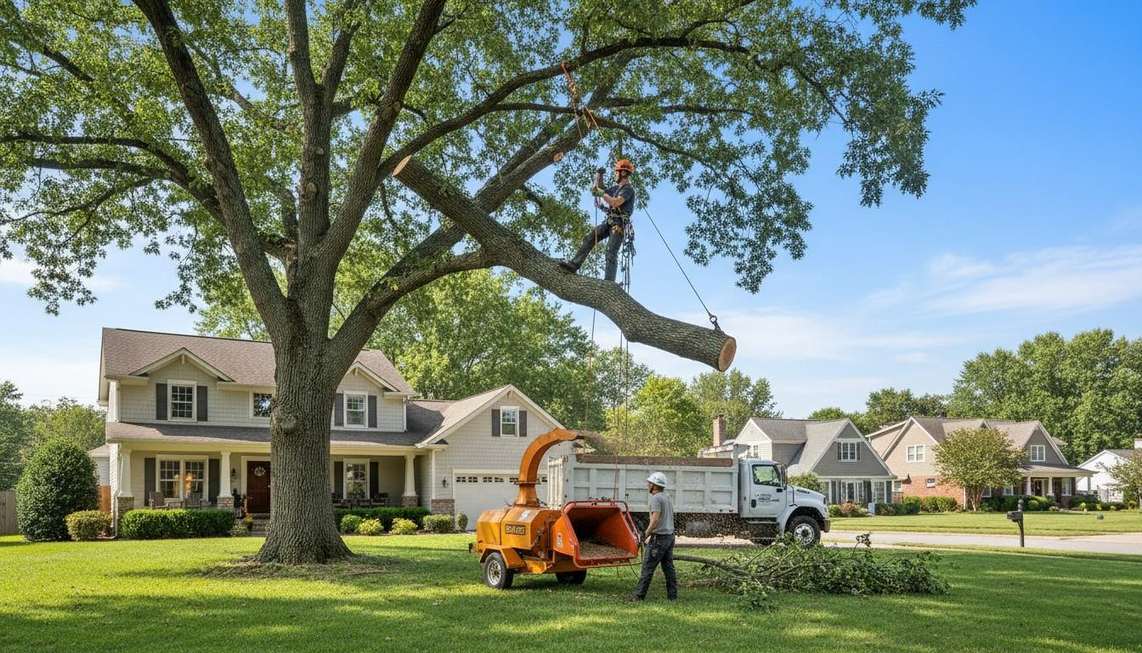
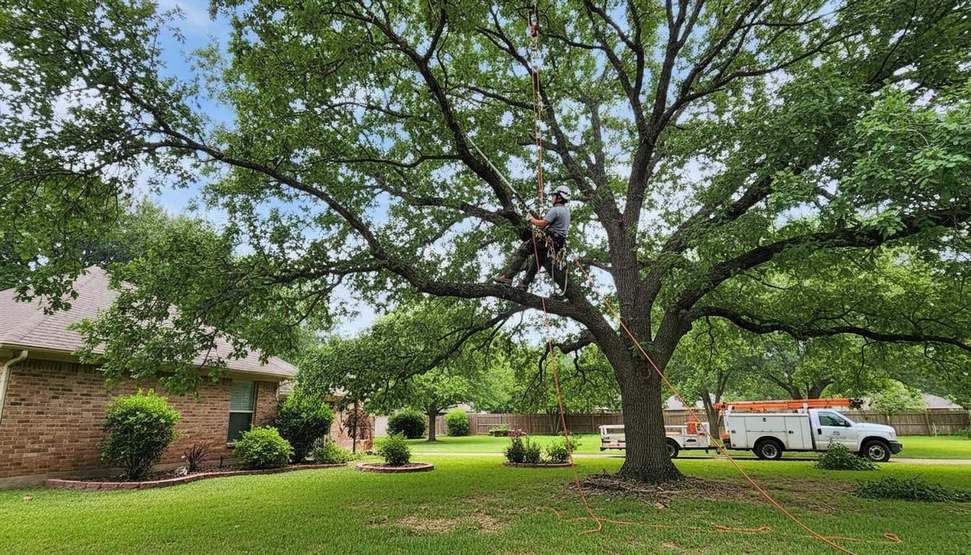
Removal is the end of the road. The whole tree comes down. Trimming keeps the tree and cuts out the problem. Most Boise homeowners standing in the yard already suspect which one they're looking at; this page is how you check that hunch.
Does my tree need removal or trimming? The short answer
A rotting trunk, a lean getting worse, a crack, roots losing their grip. If the tree's structure is failing, removal is the safer call. Dead or more than half dead also points to removal. If the tree is structurally sound and the real problem is shape, clearance, or a handful of dead or damaged branches, trimming almost always fixes it, and it costs less. Boise Tree Boys handles both under one licensed, bonded, and insured crew with ISA Certified Arborists on staff. A free estimate over the phone settles the question for your tree. Call (208) 902-2295 and describe what you are seeing. We will tell you plainly which one it needs.
What Each Service Actually Is
What does tree removal actually involve?
Removal means the entire tree gets taken apart and hauled away. Trunk, roots, everything. It's the last resort, for when the structure itself has failed or is failing: rot, disease, storm damage, a lean that keeps getting worse. Nobody drops a big tree in one cut next to a house. The crew reads the lean, sets rigging points, and lowers it in sections into a clear zone. That matters double near fences and power lines. When it's over, the branches get chipped, the wood gets hauled, and the yard gets cleaned. Want the stump gone too? Stump grinding pairs up on the same visit.
Tree trimming: the tree stays, the problem gets cut out
Trimming and pruning are the same thing. It means cutting specific branches while the tree stands and keeps growing. It covers a few distinct moves: clearing out dead or rubbing branches, bringing an overgrown canopy down the right way (cutting back to a lateral limb, never topping), and raising the lowest limbs for clearance over driveways, sidewalks, and rooflines. Done right, the tree ends up healthier and better shaped, still looks like itself, and the space around it opens back up. The tree removal page and tree trimming page walk through how each visit runs start to finish.
What signs point to removal instead of trimming?
Here's where the real answer lives. Walk out to the tree and check the trunk and the roots. Not just the branches. Branches tell you a tree is untidy; the trunk tells you whether it's failing.
Signs it needs removal
- The tree is dead, or more than half the canopy has gone over to dead wood
- Mushrooms or shelf fungus at the base or on the trunk, the visible edge of rot working through the wood
- A lean toward the house, driveway, or a power line that has visibly worsened over time
- A trunk or major limb cracked by storm, wind, or nearby construction
- Roots cut, crushed, or heaved by construction, paving, or excavation, loosening the tree's anchor
- A tree pressing hard against a structure or crowding out the light healthier trees nearby need
- Deep hollow spots you can see or reach into at the base or along the trunk
Signs it just needs trimming
- The trunk and root system are sound, the problem is up in the branches
- A handful of isolated dead limbs on an otherwise healthy tree
- Storm-torn or broken branches that didn't take the trunk with them
- A canopy crowding the house, a walkway, or a roofline that needs clearance
- Crossing or rubbing branches wearing on each other
- A lopsided or overgrown crown that just needs shape and size brought back down
- A tree that hasn't been pruned in two or three years and is due for routine maintenance
Still can't tell which side your tree is on? That's exactly whon the call is for. Our ISA Certified Arborists check the trunk and root flare, the parts the driveway view doesn't show, and tell you plainly which one your tree needs. If pruning solves it, pruning is what gets recommended. We don't talk homeowners into removing trees that can be saved.
How much time and money does each one take?
Trimming almost always costs less and takes less time than removal. Pruning a live tree in place is simply less rigging than taking the whole thing apart and hauling it off. Both prices move with the same factors: height and species, how dense or awkward the crown sits, and how close the tree stands to a house, fence, or line. A sixty-foot silver maple leaning over a North End bungalow and the same maple in an open field are very different jobs. Neither service has a fixed number; the honest figure comes from a free estimate over the phone. See the full price-range breakdown on our cost guide.
| Tree Trimming | Tree Removal | |
|---|---|---|
| What happens to the tree | Stays standing. Selected branches come out, the tree keeps growing. | Comes down entirely, sectioned and lowered, then hauled away. |
| Typical time on-site | One to two hours for a single ornamental, three to five hours for detailed structural pruning on a large tree. | Two to six hours for most single-tree removals, a full day for a large tree in a tight yard requiring careful rigging. |
| What drives the cost | Height, species, canopy density, how many branches come out. | Height, species, trunk size, what sits in the drop zone, access. |
| Relative cost | Lower, less rigging and time than a full takedown. | Higher, especially near structures where every section is roped down. |
| How pricing works | Free estimate, priced on-site, written before work begins. | Free estimate, priced on-site, written before work begins. |
These are relative comparisons, not your final price. The tree's size and species, how many branches or sections come out, and whether the crew can reach it with equipment or works by hand all move the actual number. Call (208) 902-2295 for a free written estimate over the phone before you decide anything.
What three questions settle it?
1. Is the trunk sound? Look for mushrooms, cracks, or soft, punky wood at the base. A sound trunk usually means trimming is the answer. A rotted or compromised trunk usually means removal. No amount of pruning fixes rot at the base.
2. Is the lean new or worsening? A tree that has always leaned a little and held steady is often fine. A lean getting visibly worse is a structural red flag pointing toward removal, especially after saturated ground, one of those foothills wind events, or a heavy wet snow.
3. Is the problem in the branches or the roots? Dead or crowded branches on a healthy tree are a trimming problem. Roots cut by construction, heaving a driveway, or losing grip in wet soil are a removal call. The tree's whole anchor is compromised.
Answer those three and the choice is usually clear. If it still isn't, call (208) 902-2295 and describe the tree. The same licensed, bonded, and insured crew handles both, so nobody's steering you toward one answer, and the free estimate settles it.
Tree Removal vs. Trimming: FAQ
-
How do I know if my tree needs to be removed or just trimmed?
Check the trunk and roots first, not just the branches. A dead or badly leaning tree, a trunk with rot or hollow spots, mushrooms at the base, or roots cut by construction all point toward removal. The structure itself is failing. A handful of dead limbs, a canopy crowding the house, or branches that need shape and clearance are trimming problems, and trimming is almost always the cheaper, faster fix. Not sure which side of that line your tree is on? That's exactly what a free estimate over the phone settles. Call (208) 902-2295 and we will tell you plainly which one your tree needs.
-
Is it ever cheaper to remove a struggling tree instead of trimming it?
Sometimes, but not because removal is cheap on its own. A tree that needs heavy, repeated pruning every year just to stay safe near a house can end up costing more over several years than one removal visit. That said, if a tree can be kept safely with pruning, that is what gets recommended. We don't talk homeowners into removing trees that can be saved. The free estimate visit is where the real comparison for your specific tree gets made.
-
How much does tree trimming cost compared to tree removal in Boise?
Trimming almost always costs less than removal, because pruning a live tree in place takes less rigging and less time than taking the whole tree apart and hauling it away. Both prices move with the same things: the tree's height and species, how dense or awkward the crown is, and how close it stands to a house, fence, or line. There is no fixed number for either. The honest figure comes from a free estimate over the phone. See the full price-range breakdown on our cost guide, or call (208) 902-2295 for a written estimate.
-
Can a tree be saved with trimming even if it looks bad?
Often, yes. Overgrown, uneven, dragging on the roofline. A tree that looks rough from the driveway can usually be brought back into shape as long as the trunk and root structure are sound. What actually rules out saving a tree is structural failure: significant trunk rot, a worsening lean, or a canopy that has gone more dead than alive. Looks aren't the test. The free estimate over the phone is where we check the parts you cannot see from the ground.
-
How long does trimming take compared to a full removal?
A single ornamental tree typically takes one to two hours to trim, from setup to cleanup. A large cottonwood or maple that needs detailed structural pruning might take three to five hours. Removal runs longer: most single-tree removals take two to six hours, and a large tree in a tight yard requiring careful sectional rigging can take a full day with a crew of three or four. Multiple trees on one visit, trimming or removal, are almost always more efficient than booking them one at a time.
-
What if part of my tree is dead but the rest looks healthy?
That's usually a trimming job, not a removal. Dead limbs on an otherwise sound tree get cut out so they stop being a hazard, and the live wood keeps growing. The exception is when the dead portion is a large share of the crown, roughly half or more, or the dead wood traces back to trunk rot instead of an isolated branch failure. Either way, a look at the trunk settles it. Call (208) 902-2295 and describe what you are seeing.
-
Do you recommend removal because it costs more than trimming?
No. If pruning solves the problem, pruning is what gets recommended, even though it's the smaller job. Our ISA Certified Arborists walk the tree with you, explain what they're seeing, and give you a straight answer, not the one that happens to cost more. Removal only gets recommended when the tree's structure itself is failing and pruning can't fix that.
-
Do I need a permit either way in Boise?
Trimming almost never needs a permit. Removal usually doesn't either on private residential property, but trees in public rights-of-way, designated heritage trees, or some planned developments need city approval first. If your tree is near the street or you're in an HOA, we check the rules during the free estimate and handle the permit process with you if one is required.
-
When is the best time of year to do either job in Boise?
Trimming has a season; removal mostly does not. Late winter through early spring, roughly January through March, is ideal for pruning most deciduous trees here: the tree is dormant, the structure is fully visible, and cuts heal quickly once growth resumes. Elms should never be trimmed April through October because of elm bark beetle and Dutch elm disease risk, and oaks should skip April through June. A hazardous tree that needs to come down does not wait for a season.
-
What happens to the stump if the tree comes down?
Removal takes the tree down; the stump is a separate step. You can leave it, or have it ground out. Grinding it during the same visit comes in lower than booking a second trip, because the crew and the grinder are already on site. If you plan to replant or re-sod that corner of the yard, say so up front so the grind depth matches what you want to do with the space.
-
Can trimming buy me time before a removal I am not ready for?
Sometimes. Deadwood removal and a crown or height reduction can take the immediate hazard off a tree while its structure is still holding, which buys you a season or more. That is not a fix for a hollow or split trunk, a worsening lean, or roots that have been cut, and the crew will tell you plainly which case yours is. The free estimate visit is where that gets decided.
-
Will the crew clean up the debris either way?
Yes. Full cleanup is part of every job, trimming or removal. Branches get chipped, the wood gets hauled off, and the area is left tidy before the crew leaves. If you want the stump ground as well, ask when you book so it lands on the same visit instead of making you schedule a second trip.
Not sure which one you need? Ask on the call.
Describe the tree and the crew will give you a straight answer on removal or trimming, free, no obligation.
Call (208) 902-2295 See your priceNo obligation, no pressure.